
India and China are seeing economic slowdown while growth momentum is losing steam in most of the developed world, says Paris-based think tank OECD.

'Investors should hold equity assets for 3 to 5 years.'

"India and China are the two countries which have showed growth," he said in Ahmedabad. "India has high positive growth and it is faced not with recession but a slowdown," he added.
Centre for Monitoring Indian Economy says industrial sector in India is liket to see expansion at 10.4 per cent for fiscal 2009. The reason for the current slowdown in industrial production was the supply problem faced by sectors like cement, aluminium, electricity and steel, it said. India's industrial growth slipped to 5.3% in January as compared to 11.6% in the same month last year as growth in all major sectors comprising manufacturing, electricity and mining declined.

Profits of India's top listed companies have been growing at a faster pace than those of their American peers, but when it comes to revenue growth, the order has reversed recently. The combined net profit of the S&P 500 companies was up 14.1 per cent year-on-year (Y-o-Y) during the trailing 12 months (TTM) ended December 2023, as against 17.4 per cent profit growth logged by the BSE 500 companies in the same period. This is the second consecutive year of faster profit growth for the BSE 500 companies.

Automobile retail sales increased 9 per cent year-on-year in June quarter FY25 with all segments, barring tractors, reporting growth, dealers' body FADA said on Monday. Overall retail sales rose to 61,91,225 units in the April-June period from 56,59,060 units in the same quarter of FY24. Passenger vehicle retails increased 2.53 per cent to 920,047 units as against 897,361 units a year ago.

India's economic growth is now 'extremely fragile' and needs all the support that it can get, as private consumption and capital investment are yet to pick up, RBI Monetary Policy Committee (MPC) member Jayanth R Varma said on Friday. Varma further said out of the four engines of growth for the economy, exports and government spending supported the Indian economy through the pandemic, but other engines need to pick up the baton now. " I like to think in terms of the four engines of growth for the economy: exports, government spending, capital investment and private consumption. "...while exports cannot be the main driver of growth because of the global slowdown, government spending is necessarily limited by fiscal constraints," he told PTI.

'Asset allocation should change only if your goals, life situation, or risk profile have changed.'

Economic growth is likely to plummet to a multi-decade low of 1.6 per cent in fiscal year 2020-21 due to the Covid-19 pandemic and ensuing measures like lockdowns and social distancing, an American brokerage said on Wednesday in one of the bleakest forecasts on GDP yet. Indian policymakers have not been aggressive enough in their response till now to the crisis, and will need to eventually intensify their efforts, economists at Goldman Sachs said.

The production growth of eight infrastructure sectors slowed down to 4.3 per cent in March due to a decline in the output of coal and crude oil, though for the full 2021-22 fiscal, the core sector recorded a 10.4 per cent expansion, according to official data released on Friday. The eight infrastructure sectors - coal, crude oil, natural gas, refinery products, fertiliser, steel, cement and electricity - had expanded by 6 per cent in February. During April-March 2021-22, the eight sectors grew by 10.4 per cent compared to a contraction of 6.4 per cent in 2020-21. The output of coal and crude oil contracted by 0.1 per cent and 3.4 per cent in March.

The Indian economy recovered from the Covid-induced downturn during 2022 and is poised for further improvement in the coming quarters though downside risks emanating from geopolitical tensions, strengthening dollar and elevated inflation will continue. The positive trajectory in the growth trend and improved fundamentals will help the nation in neutralising the impact of global headwinds which are expected to have a bearing on the country's exports in the months to come. The challenges before the government and the Reserve Bank in the new year would be to arrest inflation, check declining value of rupee against US dollar and promote private investment and growth, with a view to ensure that the country remains one the fastest growing major economies of the world.

Automobile retail sales in India witnessed a double-digit year-on-year growth in February driven by robust sales across segments including passenger vehicles and two-wheelers, automobile dealers' body FADA said on Monday. Total registrations across segments rose 16 per cent year-on-year to 17,75,424 units last month, as compared to 15,31,196 vehicles in February 2022. Passenger vehicle retail sales rose 11 per cent to 287,182 units last month, against 258,736 units in the year-ago period.

The value of private equity (PE)-backed mergers and acquisitions (M&As) in India reached a six-year low during the first seven months of the current calendar year, amid ongoing global uncertainties. The total value of these deals stood at $6.2 billion during the period, down from $9 billion in the same period last year, and lower than the $14 billion recorded during the corresponding period in 2019, according to data from LSEG Deals Intelligence. PE funds pool capital from investors, including high-net-worth individuals, to invest in high-return opportunities.

'India represents one of the top opportunities with robust growth, solid fundamentals, and openness to foreign investment.'
The post-Covid pandemic boom in corporate revenues appeared to have faded away in 2023-24. Yet, companies have reported a sharp recovery in their profits in FY24, driven by high margins. Their combined net sales, including gross interest income for lenders, rose by a modest 4.8 per cent year-on-year (Y-o-Y) in FY24.

India's three-wheeler exports, which have been on a downhill trajectory over the past few years, are showing no signs of recovery in FY25, with key markets like Sri Lanka, Bangladesh, Nigeria, and Egypt witnessing subdued demand. In May, the country's exports plummeted 11.3 per cent year-on-year (Y-o-Y).

The United Nations on Wednesday pared down India's growth forecast by 20 basis points to 5.8 per cent for 2023 calendar year, citing higher interest rates and risks of recession in the developed world weighing on investment and exports. "Economic growth in India is projected to moderate in 2023, with higher interest rates weighing on investment and slower global growth weakening exports," it said in its latest World Economic Situation and Prospects report. The report has projected global trade to contract 0.4 per cent and the world economy to grow at 1.9 per cent in 2023.

The stock of footwear major Bata India has been the highest gainer among larger listed footwear companies since the start of the month on expectations of a recovery in the value segment, new launches and measures by the new government to boost consumption. The third largest footwear maker by market capitalisation has been trailing its peers over the past few quarters due to the slowdown in the mass segment market which accounts for a significant chunk of its revenues.

A reading above 50 indicates expansion, while a reading below 50 reflects contraction.
The United Nations has predicted a deceleration of the world economy this year after three straight years of growth with American economy weakening dragged down by softening housing market.

With the prediction of an above normal monsoon in 2024, the government is expecting food prices to come down, the finance ministry's monthly economic report for March has said. The report, released on Thursday, said robust foreign inflows and comfortable trade deficits were expected to keep the rupee within a comfortable range. "Further easing of food prices is on the anvil as IMD (India Meteorological Department) has predicted above-normal rainfall during the monsoon season, which is likely to lead to higher production, assuming good spatial and temporal distribution of the rainfall," the monthly report, released by the Department of Economic Affairs, said.
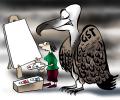
Experts said if the slowdown, and subsequent weakness in GST mobilisation, continued, it would curtail the Centre's resources to a considerable extent in the current financial year.
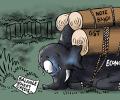
'The current budgetary practice of shifting expenditures off-balance sheet in order to be seen to be meeting fiscal targets should be discontinued; additional fiscal stimulus would be imprudent; individual income tax rates should not be cut; GST rates should not be raised now,' advise Arvind Subramanian and Josh Felman.

'Domestic investors are opening up to the idea of high-growth Internet companies as a pool of value creation.' 'They like the execution that they see with Zepto, and for us, that is the most important factor.'

The slowdown fear, as substantiated by various parameters like the HSBC Purchasing Managers' Index as well as the Index of Industrial Production, has gripped large companies but the smaller entities still seem hopeful of excellent growth. At least, tax collection figures show this trend.
The worries for the industry include defaulting payments, slowdown in industry growth rate and budget cuts. "While we are bracing ourselves for budget cuts in the near future, we can't give our customers longer credit cycles as we operate on wafer-thin operating margins," says Mudhukar Kamath, MD and CEO, Mudra Group, while admitting that they have experienced a few cases where payments are getting stretched.

Moody's Investors Service on Wednesday said the outlook for global banks for 2024 is negative as central banks' tighter monetary policies have resulted in lower GDP growth. It said Indian banks' profitability will increase further on lower provisioning expenses and robust growth in higher-yielding retail segments. "Our outlook for global banks for 2024 is negative as central banks' tighter monetary policies have resulted in lower GDP growth.

'Barring a temporary blip where stocks fell on verdict day, we are back to all-time highs.'

Further stimulus measures are expected in the upcoming Budget where the focus is likely to be on reforms, including some structural measures such as reducing red tape and boosting foreign direct investment. The meeting with industrialists is in the series of discussions that Modi has had during the last couple of weeks to seek suggestions to revive growth.

Looking under the hood, I see India on the terrible, but commonplace, road to prosperity failure, warns Rathin Roy.

Addressing shareholders of group firm Tata Motors in the Annual Report for 2010-11, Tata said: "Inflation is indeed a lurking enemy of healthy growth and needs to be controlled."

'We have relatively strong growth and a healthy corporate earnings cycle as positives, but a worrisome current account deficit and high inflation as challenges.'
India Inc reported an uptick in revenue growth in the January-March quarter (Q4) of 2023-24 (FY24), but it came at the cost of a deceleration in earnings growth.

Bank credit offtake is expected to pick up following normalisation of economic activities aided by the government thrust on public expenditure in current fiscal year, a report said. According to the Care Edge report, the gross non-performing assets (GNPA) ratio hit a six-year low of 5.9 per cent in FY22 but remained above the pre-asset quality review of 2015-16. However, it said, India's NPA ratio is one of the highest among the comparable countries despite gradual decline.

In addition to interest rates, review the fine print for penalties and repayment terms, and select a reputable lender to avoid harsh recovery practices.
India Inc on Monday asked the government to pull out all stops to ensure availability of enough money to drive the economy on a high growth trajectory despite the global meltdown.

Dabur India has been the worst performer in the fast-moving consumer goods (FMCG) space this year (CY23), posting a 1 per cent decline even as its peer index, the Nifty FMCG, has delivered returns of over 29 per cent in this period.
Corporate India reported high double-digit growth in net profit for the fourth consecutive quarter in October-December 2023 (Q3FY24), driven by margin gains from lower prices of raw material and energy.

Most companies reporting an improvement in operating margins in Q1 as they cut ad spends and other expenses.
